
Most coaches who want to start recording sessions can name the exact moment they decided to do it — the breakthrough a client had mid-call, the technique they watched land in real time, the first session where they thought, I want to be able to return to this. Then months pass and they still haven't asked a single client.
The reason isn't reluctance. It's the ask itself. "How do I bring this up?" feels clinical, or heavy, or like it might shift the atmosphere of the session. The conversation never happens, so the recording never starts, and the sessions keep disappearing.
The ask takes about twenty seconds. Here's how to make those twenty seconds easy.
Why recording consent feels awkward (and why it shouldn't)
The word "consent" pulls toward a medical register — forms, checkboxes, disclosures. Coaches who are wired toward warmth and informality find that register uncomfortable, which is exactly why they defer the conversation.
The reframe: the recording is for the client, not for you. You're not asking them to accept something being done to them. You're announcing something good that comes with the work — a way to revisit what happened in the session, replay the moment a reframe landed, or read back through what they committed to between calls. Most clients say yes without hesitation. The ones who say no have told you something useful about their comfort level, and that's worth knowing before you start recording rather than after. Coaches who've started routinely delivering recordings often describe the same surprise: clients don't just tolerate them; they reference them, quote them back, and thank you for them.
That's the right mental model. Giving recording consent is not something you're asking clients to accept — it's something you're offering them.
When and how to tell a client you're recording
The best moment is before the first session, not during it. Framing recording as a stated norm in your intake process — before you've ever spoken — means the client arrives expecting it, not discovering it mid-call. Consent becomes part of onboarding, not an interruption.
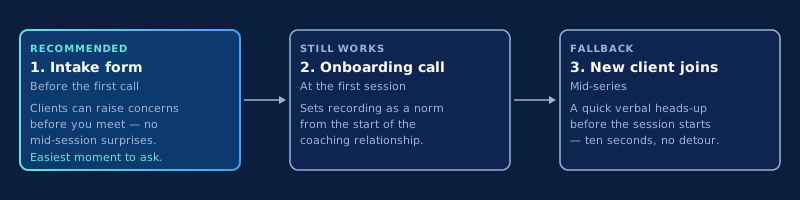
In your intake form or client agreement:
Sessions are recorded and shared with you via a private Google Drive link.
One sentence. Recording becomes part of the structure of the relationship before the client says hello.
At onboarding, if you're stating it verbally:
I record all our sessions so you can revisit them afterward. You'll have the video, audio, and a searchable transcript in a private folder that's yours to keep. Is that alright?
Most clients say yes without a follow-up question. The ones who pause usually want to know who else can see the recording — and "just you, in a Drive folder I share only with you" closes it.
If a new client joins a group or program mid-series:
Quick heads-up before we start — I record every session and send you a link right after. You'll have a video and transcript of everything we cover today.
Ten seconds. It doesn't break the flow; it signals care. The client who hears this knows the session is worth capturing.
The order matters more than the words. Once the recording consent conversation happens at intake — in writing, before you've ever spoken — you never have to revisit it in a session again. It becomes part of what working with you means, not something you negotiate one client at a time.
How RecordFlow fits
The ask is the easy part. What slips for most coaches is the manual download-and-share loop afterward — the session ends, the recording sits in Zoom, and the "send the client their link" task drifts off the to-do list for two days. That's where the promise made at intake quietly stops being kept.
RecordFlow closes that gap automatically. Connect Zoom to a Drive folder once, and once Zoom finishes processing the recording, RecordFlow moves everything there — video, audio, the chat log, and a clean transcript Doc when Zoom generated one. When the client asks for their replay, sharing it from Drive takes three clicks: open the session folder, share it to the client's email, done — no download, no reupload, no separate login required on their end.
The promise you made at onboarding — "you'll always be able to revisit what we covered" — then takes care of itself.
The coaches who record every session aren't bolder or more forward than the ones who don't. They just had the twenty-second conversation once — in an intake form, or at the start of the first call — and then stopped having to think about it. The awkward moment becomes a non-moment. The client arrives expecting the recording.
Make the delivery as easy as the ask.
Connect Zoom and Google Drive once. Every recorded session lands in a private folder automatically — video, audio, and a clean transcript Doc — ready to share with a Drive link the client can open without a Zoom account. Free during beta.