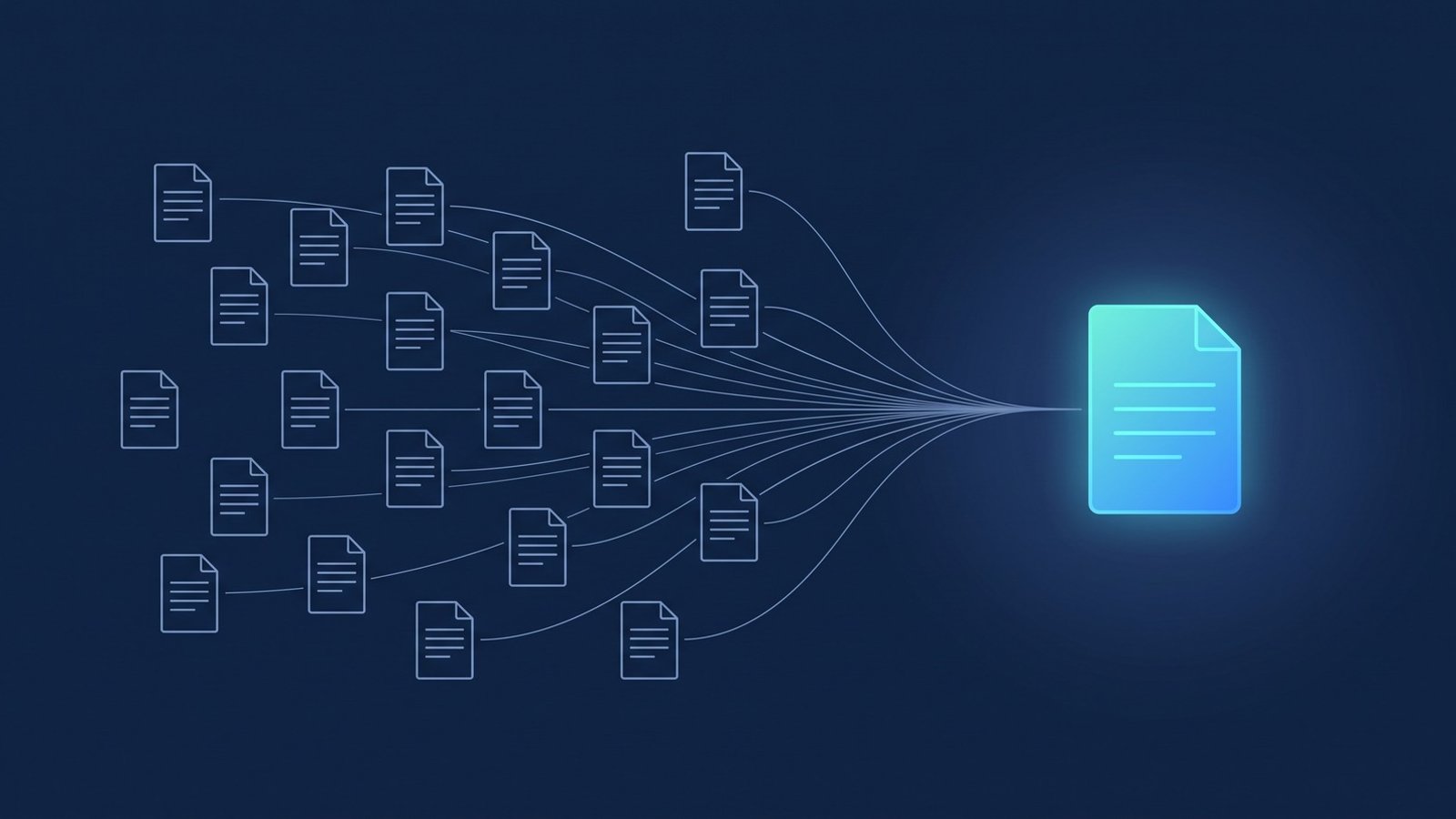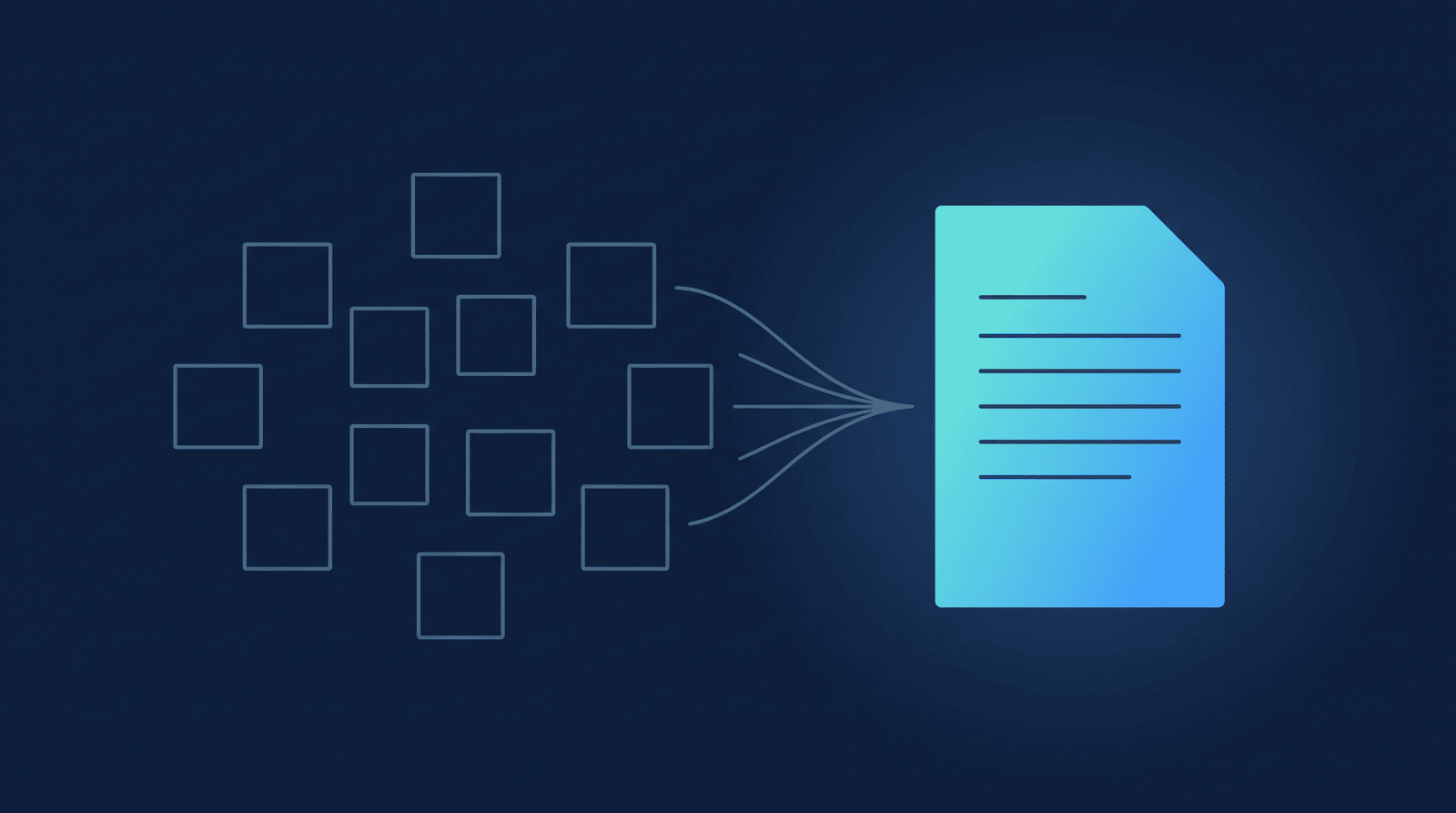
It's the night before the exam, and the material isn't in your notes — it's scattered across nine weeks of recorded lectures you never had time to rewatch. Or you're the instructor, and a student has just asked whether you could "maybe put together a study guide" from six sessions you already ran live and don't have the hours to summarize again. Either way, the material already exists. It's just trapped in video form, one recording at a time.
Gemini Notebook — Google's tool for asking questions of and generating study material from your own documents, renamed from NotebookLM in July 2026 (same product, same URL, new name) — can turn a lecture into a study guide on demand. The catch is what it can actually read. This post covers the one step that has to happen first — getting a real, readable transcript into Drive — and then the two workflows built on top of it: a study guide from one lecture, and a study guide spanning a whole course.
What's actually happening
Zoom's own transcript is a .vtt caption file — a W3C-standardized format built for a video player's caption track, not for reading: every few seconds of speech is its own numbered cue with a start and end timestamp, and no paragraph breaks. Gemini Notebook's source picker doesn't accept a raw .vtt file, and a Zoom Cloud link won't reliably fare any better — it takes Google Docs, Slides, Sheets, PDFs, and a broad set of other file and web-source types, but a caption file isn't one of them. Google's own Gemini Notebook documentation covers what a notebook accepts as a source and what the Studio panel can generate from it.
The deep-dive on converting Zoom transcripts to Google Docs covers exactly what Zoom's raw file looks like and why it's a dead end for AI tools — this post picks up from there and assumes you're already convinced. Until the lecture's content exists as one of the file types Gemini Notebook actually reads, there's no study guide to generate.
How to fix it
- Get the transcript into Drive as a clean Google Doc, not just the raw
.vtt. RecordFlow uploads both automatically for every synced recording: the original.vttuntouched, and a native Google Doc with cue numbers stripped, consecutive lines from the same speaker merged into paragraphs, and each paragraph opening with a rounded[HH:MM:SS]timestamp and the speaker's name in bold. If you haven't set the backup itself up yet, the companion how-to on backing up Zoom recordings to Google Drive automatically covers the 60-second setup, and the deep-dive on converting Zoom transcripts to Google Docs covers exactly what changes in that conversion. - Open Gemini Notebook and add the transcript Doc as a source. In a new or existing notebook, choose "Add sources," pick Google Drive, and select the lecture's transcript Doc. RecordFlow names each meeting folder with the recording's date and the meeting topic, which is what lets you tell one week's lecture apart from another in the source picker.
- Generate the study guide from the Studio panel. Choose the report option and pick "study guide" (alongside FAQ and briefing document as the other built-in report types) — Gemini Notebook grounds the output in the source you added and cites the part of the transcript each section comes from, so a claim in the guide traces back to the moment in the lecture that supports it.
- For a whole course, add every session's transcript Doc to the same notebook first. A study guide generated from one notebook only reflects the sources sitting in it — the same principle behind turning a folder of transcripts into a queryable knowledge base. Add the transcript Docs for every lecture in the unit or term before generating the report, and the guide spans the whole course instead of a single session — useful for a final-exam guide that has to draw across nine weeks, not just the most recent one.
If the course is a recurring Zoom meeting, naming it with a shared prefix — BIO 201/Week 6 — lets RecordFlow collect every session's recording and transcript into one shared class folder automatically instead of a new folder each week, so building a term's worth of Gemini Notebook sources is adding one folder, not hunting down nine separate Docs. It's off by default and only applies to future syncs. Full mechanics.
Study guides are one workflow among several that open up once a lecture is in Drive — the ecosystem overview of Zoom recordings in Google Workspace covers what Docs, Gemini Notebook, and Vids can each do with the same archived recording.
What to check if something goes wrong
How RecordFlow fits
RecordFlow isn't the study tool here — Gemini Notebook is. RecordFlow's job stops one step earlier: sign in with Zoom, connect Drive, pick a folder — about 60 seconds — and from then on every lecture recording lands there automatically, transcript included as both the raw .vtt and a readable Google Doc, in a folder named by date and topic. RecordFlow never reads or summarizes what's in the transcript — it copies the file into a Drive folder you own and stops there; what Gemini Notebook builds from it after that runs on your own Google account. That combination — every session archived without anyone re-uploading anything, and transcribed into a document Gemini Notebook can actually read — is what makes "generate a study guide for the whole course" a five-minute task instead of a rewatch.
Put your Zoom lectures where Gemini Notebook can turn them into study guides.
Pick a Google Drive folder once. Every recording lands there automatically with a clean Google Doc transcript, ready to add as a Gemini Notebook source. Free during beta.