You finish a session feeling good about it — the client had a breakthrough, the flow felt natural, your questions landed. Then, months later, you happen to watch the recording back. You interrupted twice in the first ten minutes. A silence you remember as "giving space" lasted four seconds before you filled it with a suggestion. The open question you were proud of was actually two closed ones stacked together. None of this matches how the session felt while you were in it.
That gap is normal, and it's exactly why reviewing your own recordings is worth the discomfort.
Why self-assessment is so hard for coaches
Self-perception during a live coaching session is unreliable, and not because you're a bad coach — it's because you're busy doing the thing, not watching yourself do it. You're tracking the client's words, your own next question, the thread from ten minutes ago, and the clock, all at once. There's no attention left over for an accurate read on your own talk time or question style.
This isn't unique to coaching. A systematic review of video-based self-assessment interventions among physicians found that self-assessment from memory was often inaccurate — both over- and under-estimating performance depending on the specialty. Watching the recording back improved self-assessment accuracy in just over half of the studies reviewed. The pattern tracks for coaches: you can recall the feeling of a session with real clarity. You can't recall the mechanics — how often you talked over the client, how many of your "open" questions had an answer baked into them, which silences you sat with and which you rushed to rescue. Those only show up on a replay.
It's also the ICF's own frame, not just a good habit. Sub-competency 2.3 under "Embodies a Coaching Mindset" — ICF Core Competency 2 — states that a coach "develops an ongoing reflective practice to enhance one's coaching." Reviewing your own sessions is one of the most concrete ways to actually do that, separate from anything related to a credential application.
A simple self-review routine
You don't need a formal process to improve as a coach — a short, repeatable routine beats an occasional deep audit you never get around to.
- Pick one session a quarter, not every session. Reviewing everything is how this habit dies in week two. Choose one recent session — ideally one that felt average, not your best or worst — and give it a real 20–30 minutes.
- Watch (or skim the transcript) for talk ratio first. Roughly, who talked more? A coaching conversation should tilt heavily toward the client. If you're consistently talking as much as or more than they are, that's the single highest-leverage thing to notice.
- Count your questions, then sort them. How many were genuinely open ("what's underneath that for you?") versus closed-with-extra-steps ("do you think that's because you're avoiding the conflict?")? A question with the answer already in it isn't really a question.
- Time the silences you rushed. Notice every place you filled a pause with a suggestion, a reframe, or your own words within a few seconds. Some of those pauses were the client doing real thinking — and you took the room away from them before they finished.
- Write down one pattern, not ten. The point isn't a full audit. It's noticing the one thing you keep doing without realizing it, then bringing that single pattern into your next few sessions.
The transcript is what makes this fast instead of tedious. Scrubbing back and forth through 45 minutes of video to count questions is exactly tedious enough that most coaches never do it. Skimming a readable, timestamped transcript and Ctrl-F'ing your own name to see how much of the page is you talking takes a few minutes, not a rewatch.
How RecordFlow fits
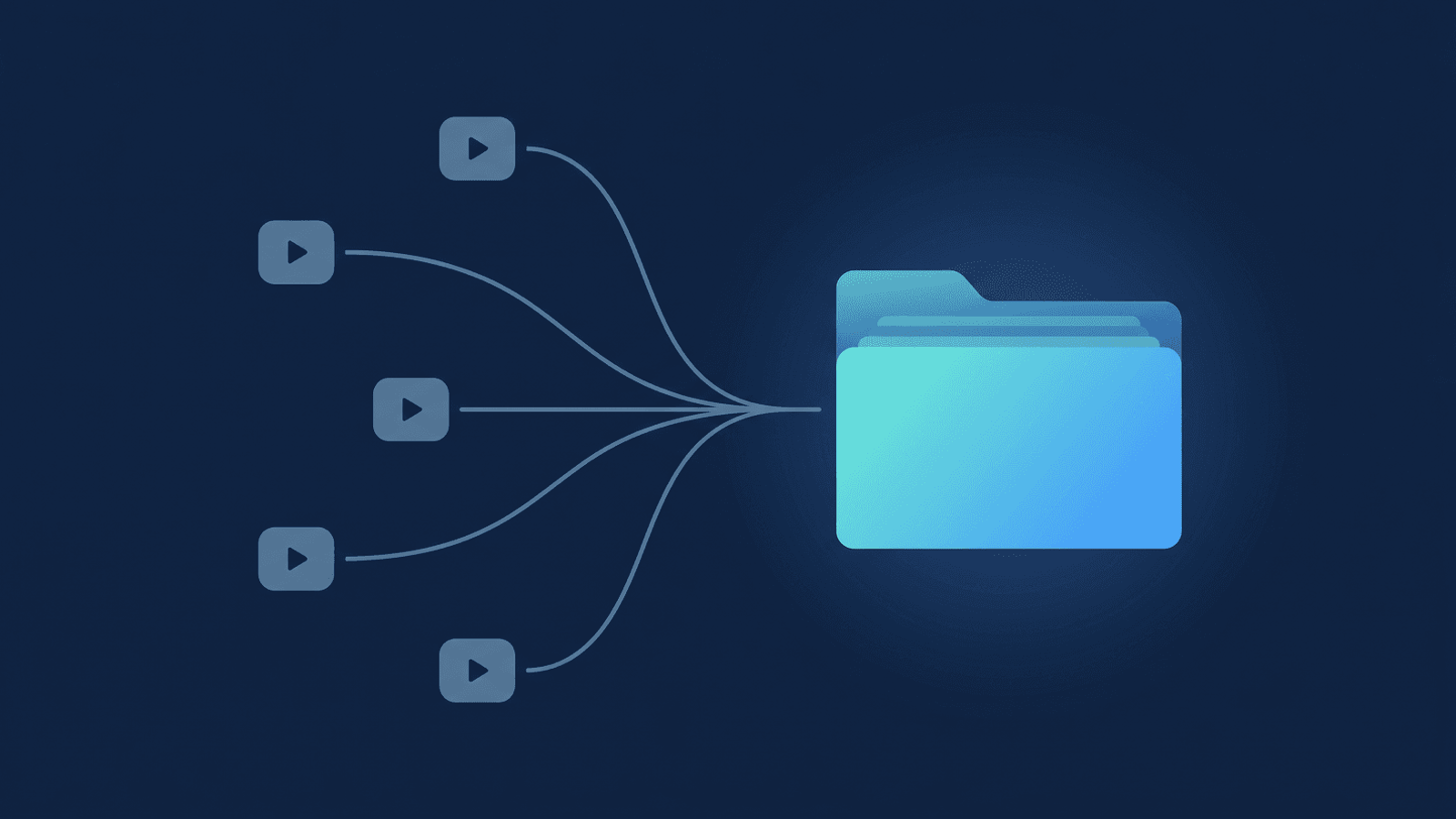
RecordFlow doesn't do the reviewing for you — it just makes sure the raw material is always sitting there, ready, instead of automatically deleted under a Zoom retention setting or buried in Zoom Cloud by the time you'd actually sit down with it. The moment a Zoom cloud recording is ready, RecordFlow copies the video, audio, chat log, and transcript into a Google Drive folder you own, one folder per session. Alongside the raw .vtt, it uploads a clean Google Doc transcript — consecutive lines from the same speaker merged into readable paragraphs, each one timestamped and labeled with the speaker's name (the mechanics are in the transcript-to-Doc post). That's the version you skim for talk ratio and question count; the raw caption file is not.
Because every session lands automatically, "pick one from this quarter" is a real choice between several saved sessions rather than a hope that you happened to keep the right one. And because it's your Drive folder, the recording you're reviewing is the same copy you might later hand to a client (see the post on giving clients their session recording) or, on a different track entirely, submit toward an ICF credential (the ICF recording and transcript requirements are a separate use case for the same archive).
The sessions that would tell you the most about your own patterns are the ones that already happened and are sitting, unwatched, in your Zoom Cloud or your Drive right now. The only real barrier is the bit of friction in actually sitting down with it — and a searchable transcript is what removes that friction.
Keep every session, so you can review any of them later.
Connect Zoom and Google Drive once. Every recorded session lands in a folder you own — video, audio, and a clean transcript Doc — ready whenever you want to watch yourself coach. Free during beta.